

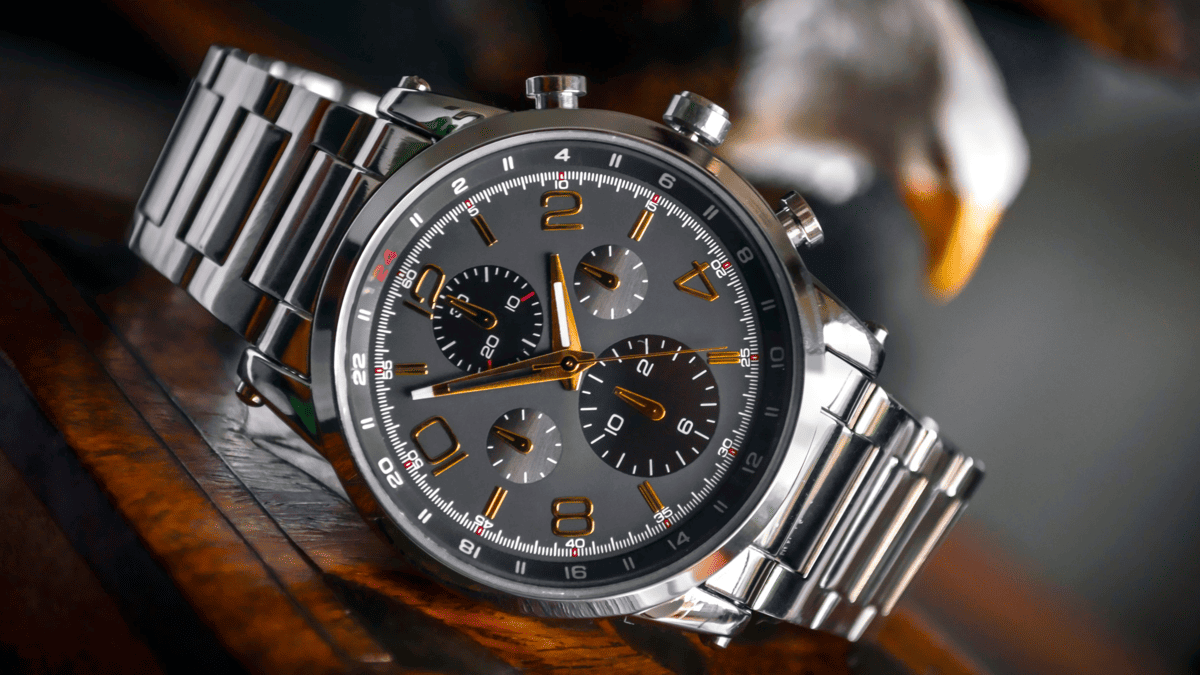
Acquiring your first luxury timepiece is a milestone that marks both personal achievement and an appreciation for fine craftsmanship. When entering the world of haute horology, however, collectors invariably face a pivotal debate: Mechanical vs. Quartz. While both options yield exceptional elegance, understanding the nuanced differences between these movements ensures your choice reflects your lifestyle, values, and long-term aesthetic vision.
The Mechanical Movement: Horological Tradition and Artistry
For centuries, mechanical watchmaking has represented the absolute pinnacle of micro-engineering. Powered by a tightly wound mainspring rather than an electronic battery, a mechanical movement relies on hundreds of tiny components working in harmonious synchronization.
- Craftsmanship: Every gear, bridge, and lever is meticulously finished, often by hand. Because of this dedication to tradition, wearing a mechanical watch offers a tangible connection to historic artisans.
- The Sweep: One of the most enchanting elements of a mechanical piece is the smooth, continuous sweep of the second hand across the dial, which contrasts sharply with the distinct tick of electronic movements.
- Longevity: A fine mechanical watch can endure for generations, provided it undergoes periodic servicing. Because its components can be machined or restored by skilled horologists, it rarely becomes obsolete.
However, traditional mechanical movements require attentiveness. Manual-wind models require regular winding, whereas automatic variants rely on the kinetic motion of your wrist to maintain power. Furthermore, because mechanical components are susceptible to gravity and magnetic fields, they may gain or lose a few seconds each day.
The Quartz Movement: Uncompromised Precision and Modern Reliability
Introduced in the late twentieth century, quartz technology revolutionised timekeeping by utilizing a tiny quartz crystal powered by a battery. When an electrical current passes through the crystal, it vibrates at an extraordinarily precise frequency, ensuring flawless accuracy.
- Flawless Precision: Quartz movements are remarkably accurate, typically gaining or losing only a few seconds per month.
- Effortless Wear: Because a quartz watch does not require daily movement or winding, it is ready to wear at a moment’s notice—ideal for high-rotation wardrobes.
- Slender Profiles: Because quartz calibres require fewer mechanical layers, watchmakers can craft extraordinarily thin cases, which slide effortlessly beneath a tailored shirt cuff.
However, purists sometimes view quartz pieces as lacking the traditional mechanical soul. Nevertheless, top-tier luxury houses craft quartz dress watches with precious metals, exquisite hand-finished dials, and hand-set gemstones, ensuring they command immense respect.
Key Factors for Your First Luxury Investment
| Consideration | Mechanical Watch | Quartz Watch |
| Accuracy | High ($\pm 2-6$ seconds per day) | Exceptional ($\pm 15$ seconds per month) |
| Maintenance | Full service every 3–5 years | Battery replacement every 2–4 years |
| Heritage Value | Exceptional heirloom potential | Practical elegance with lower upkeep |
| Wearing Style | Ideal for daily appreciation | Perfect for low-maintenance sophistication |
Making the Choice
When deciding on Mechanical vs. Quartz, your personal rhythm should dictate your choice. If you value centuries of heritage, complex mechanics, and the romantic ritual of winding a timepiece, a mechanical dress watch is an unbeatable choice. Conversely, if you prioritise sleek comfort, precise reliability, and effortless daily elegance, a luxury quartz watch delivers unmatched convenience.
Ultimately, your first luxury dress watch is far more than a tool for keeping time—it is a personal signature that subtly communicates your appreciation for quality and quiet sophistication.
Leave a Reply